Courses
A Physician’s Practical Guide to Culturally Competent Care
With the increasing diversity of the United States' population, physicians are more and more likely to encounter situations that require the delivery of culturally competent care, access to a vast array of language services, and supportive health care organizations.
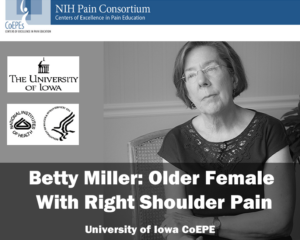
Betty Miller: Older Female With Right Shoulder Pain
The goal of this course is to provide an interactive learning experience about acute shoulder pain in an older adult. Intended Audience — The intended audience for this course is public health professional, healthcare providers, and pre-licensure students in the fields of medicine, nursing, physical and occupational therapy, pharmacy, and social services. Learning Objectives — At the end of this course, you will be able to Apply valid and reliable tools for measuring pain and associated symptoms to assess and reassess related outcomes as appropriate for the older adult with frozen shoulder. Identify the value and contribution of each team...
Burning Mouth Syndrome and Related Orofacial Pain
The goal of this course is to provide an interactive learning experience about a 46-year old woman named Beverly with Burning Mouth Syndrome. Intended Audience — The intended audience for this course is pre-licensure students in the fields of medicine, pharmacy, nursing, physician assistant, and physical therapy. Length — The length for this course is approximately 60 minutes depending on the individual user. Upon completion of the course, you will get a certificate of completion. Course Content — This interactive module will cover six parts: Beverly Interview Physical Exam Systems Review Labs and Tests Medications Pain Center Measurable Outcomes —...

Cholesterol: Everything You Need to Know to Provide Patient Education
There are ten sections in this course: Overview — Section 1: Background Section 2: Detection and Evaluation Section 3: Goals and Treatment Overview Section 4: Therapeutic Lifestyle Changes (TLC) Section 5: Drug Therapy Section 6: Metabolic Syndrome Section 7: Specific Dyslipidemias Section 8: Population Groups at Risk Section 9: Adherence Section 10: Implementation Intended Audience — Healthcare providers who screen and treat WISEWOMEN patients; Physicians, Physicians Assistants, Nurses, Medical Assistants and health educators. Learning Objectives — Upon completion of this course, participants should be able to: Identify types of patients that need their cholesterol checked regularly Explain cholesterol numbers to...
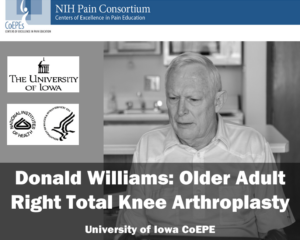
Donald Williams: Interdisciplinary Pain Management: Older Adult Right Total Knee Arthroplasty
The goal of this course is to provide an interactive learning experience about an older gentleman, Donald Williams, who had a total knee arthroplasty. Intended Audience — The intended audience for this course is public health professional, healthcare providers, and pre-licensure students in the fields of medicine, nursing, physical and occupational therapy, pharmacy, and social services. Interdisciplinary care coordination plays an integral role in post total knee arthroplasty case management. The healthcare team may have similar areas for assessment such as pain assessment, pain impact, safety assessment or home exercise program. Each discipline will evaluate the information to address different...
Foundational Public Health Nursing Training Program
About This Program: — The "Foundational Public Health Nursing Training Program" was designed to address key knowledge, skills, and abilities public health nursing coordinators/supervisors must apply to demonstrate the core public health nursing competencies and to deliver the essential public health services at a local level. This program meets the educational requirements stated in the definition of a "Public Health Coordinator/Supervisor," in the Iowa Administrative Code, Chapter 80 on Local Public Health Services. Program Content: — There are five courses in this program: Presenter(s): Length: Course 1: Knowledge of Public Health Christopher Atchison 1 hour Course 2: Strategic...
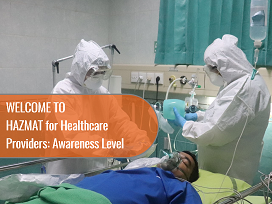
HAZMAT for Healthcare Providers: Awareness Level
Goal — The presence of hazardous materials in an Emergency Department is a risk to everyone - hospital personnel, patients and other people within the hospital. During HAZMAT incidents, hospital personnel should have two main goals: to protect both themselves and others from exposure to the hazardous material to provide the same level of care for the contaminated patient as any other patient This course is intended to help you respond to incidents involving hazardous materials in a way that meets these two goals. Intended Audience — This course is intended for health care workers in a hospital environment who...
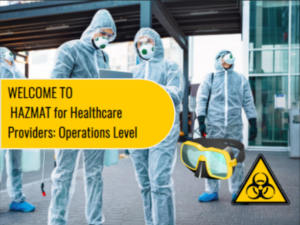
HAZMAT for Healthcare Providers: Operations Level
Course Overview — Goal/Intended Audience — This course is intended for health care workers in a hospital environment who may need to respond to an incident involving a contaminated patient on the operations level. Prerequisite — HAZMAT Awareness for Healthcare Providers is a prerequisite for this course. Capabilities identified: — Capability 2: Community Recovery Function 1: Identify and monitor public health, medical, and mental/behavioral health system recovery needs. Function 2: Coordinate community public health, medical, and mental/behavioral health system recovery operations. Function 3: Implement corrective actions to mitigate damages from future incidents. Capability 6: Information Sharing Function 1: Identify stakeholders...
Hemoglobin Screening: Data Collection, Assessment and Implications
Goal — This course is designed for WIC personnel and other health care providers participating in hematological data collection and assessment. The goals of the course are to: Increase awareness of related state policy and additional references. Reinforce appropriate hematological data collection technique. Enhance ability to critically think about hematological data assessment. Intended Audience — The examples provided in this course and some topics are specific to WIC, but much of the course is applicable to all health professionals who complete hematological assessments. The course will provide basic information for hemoglobin testing as well as critical thinking application of data...
Margaret Andersen: An Older Adult With Limited Communication
The goal of this course is to provide an interactive learning experience about about a 85-year-old woman, Margaret Andersen, with limited communication who demonstrates changes in behavior two weeks after entering a nursing care facility. Intended Audience — The intended audience for this course is public health professionals, pre-licensure students in the fields of medicine, dentistry, nursing, physical and occupational therapy, pharmacy, and social services. Learning Objectives — At the end of this module, you will be able to: Apply valid and reliable tools for pain assessment in an older adult with limited communication. Describe the important elements of oral...
Motivational Interviewing: Supporting Patients in Health Behavior Change
This course is designed to equip healthcare providers and ancillary staff with the knowledge and tools to optimize patient behavior change to ultimately improve health outcomes. The following are the topics that will be covered in this course: Components of Motivational Interviewing (MI) Benefits of Using Motivational Interviewing Traditional Expert-Centered Model vs. MI Patient-Centered Model Principles of MI Readiness to Elicit Change Talk Script and narration for the presentation is prepared by Dr. Rebecca Lang. There is a posttest at the end of the course. A Certificate of Completion is awarded on successful completion of this course. Intended Audience —...
Mr. Lane: Acute Injury Farm Accident With Chronic Pain
The goal of this course is to provide an interactive learning experience about acute injury in a person who has chronic pain. Intended Audience — The intended audience for this course includes public health professionals, healthcare providers, and pre-licensure students in the fields of pain management and education. Learning Objectives — At the end of this course, you will be able to: Explain how cultural, institutional, societal, and regulatory influences affect assessment and management of pain. Use valid and reliable tools for measuring pain and associated symptoms to assess and reassess related outcomes as appropriate for the clinical context and...
Salt/Sodium Reduction: Opportunities for Change
There are four sections in this course: Section 1: Salt and Sodium – Sources and Recommendations Section 2: Public Health Imperative Section 3: Campaigns and Actions Section 4: How Can You Use this Knowledge Intended Audience — Healthcare providers who screen and treat WISEWOMEN patients; Physicians, Physicians Assistants, Nurses, Medical Assistants and health educators. Learning Objectives: — At the end of this course, participants will be able to: Identifythe sources of salt/sodium intake Applythe recommendations of salt/sodium intake Discusssalt/sodium reduction efforts as a public health imperative Demonstratethe association between salt/sodium intake and high blood pressure Recognizethe current campaigns and activates...
Serving Diverse Communities: Building Cultural Competence and Humility into the Workplace
The content of this course includes: Introductions to culture, cultural competence, cultural humility. Resource demonstrations that you can use to help build a more culturally competent and humble workplace. You will have the opportunity to watch the demo of accessing these resources. Length — One hour Intended Audience — Public health professionals and healthcare providers interested working with non-native English speakers that needs to provide access to reliable health information. Learning objectives — At the end of this training module, you will be able to: Define culture, cultural competence, and cultural humility; Describe the differences between cultural competence and humility;...